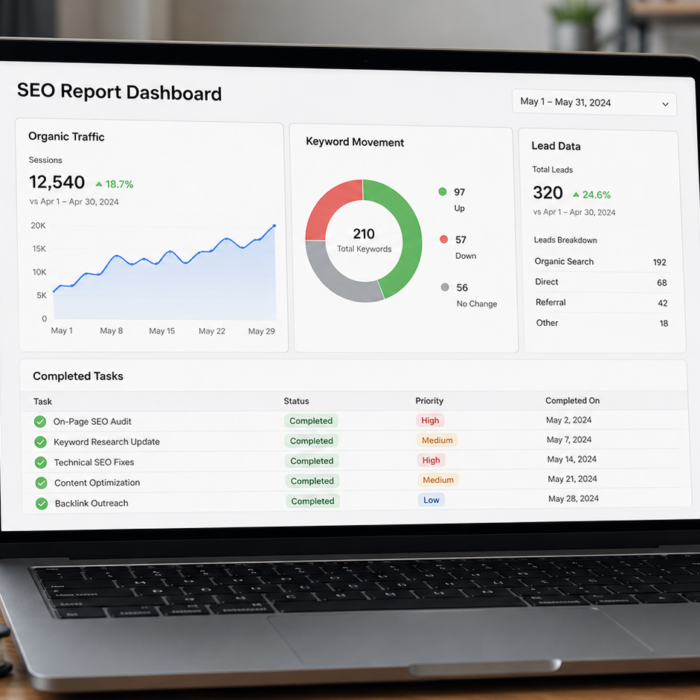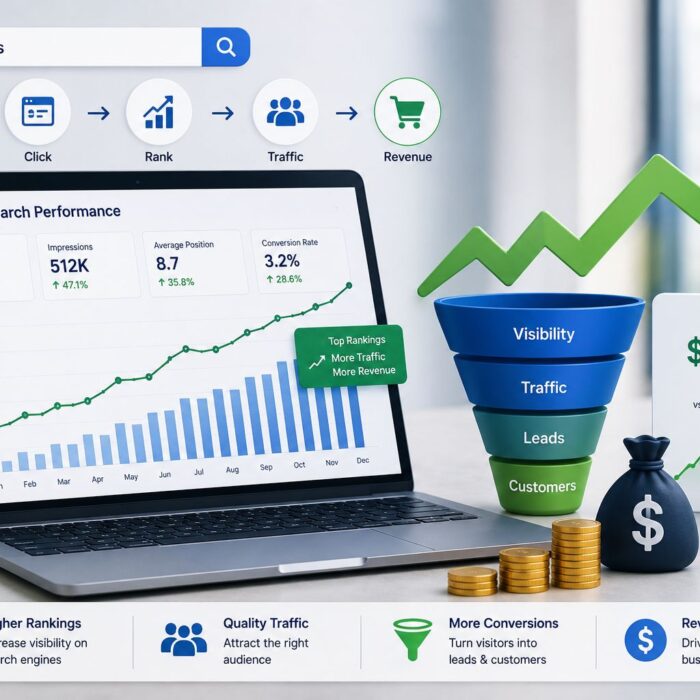


A strong SEO strategy helps small businesses grow by improving search rankings, attracting qualified traffic, and turning visitors into paying customers. It combines keyword research, on-page fixes, technical health, local optimization, and quality content to build steady, long-term revenue without heavy ad spend.
Running a small business is hard enough. Then you add the pressure of getting found online.
You know your product is great. You know your service beats the competition. But if customers cannot find you on Google, none of that matters.
That is where SEO Services come in. Search engine optimization helps your website show up when people search for what you sell. Done right, it brings you a steady flow of leads without paying for every click.
In this guide, you will learn what a real SEO strategy looks like, the mistakes that hold small businesses back, and the steps you can take today. We will also cover how the right partner speeds things up.
Why SEO Matters for Small Business Growth
Most buying journeys start with a search. People look for products, services, and answers before they ever call you.
If you are not on page one, you are nearly invisible. Studies from Search Engine Journal show that the top few results get the vast majority of clicks. Everyone below fights for scraps.
Here is why SEO is a smart bet for small teams:
- It brings free, ongoing traffic once you rank
- It targets people who are already looking to buy
- It builds trust, since top rankings signal authority
- It costs less over time than paid ads
Paid ads stop the second you stop paying. SEO keeps working. That makes it one of the best long-term investments a small business can make.
What Does a Small Business SEO Strategy Include?
A good strategy is more than stuffing keywords into a page. It has several moving parts that work together.
Think of it like building a house. You need a strong foundation, solid structure, and good curb appeal.
Here are the core pieces:
- Keyword research: Finding the exact phrases your customers type into Google
- On-page SEO: Optimizing titles, headings, and content for those terms
- Technical SEO: Making sure your site is fast, mobile-friendly, and easy to crawl
- Content creation: Publishing helpful pages and blog posts that answer real questions
- Link building: Earning quality backlinks that boost your authority
- Local SEO: Showing up in map results and “near me” searches
If any piece is weak, results suffer. That is why many owners partner with an SEO agency to handle the whole system.
How to Build an SEO Strategy Step by Step
You do not need to do everything at once. Follow these steps in order and build momentum.
Step 1: Run an SEO Audit
Start by checking your current health. An audit finds broken links, slow pages, missing tags, and other issues. A proper SEO audit gives you a clear list of fixes and quick wins.
Step 2: Research Your Keywords
Find out what your customers search for. Focus on terms with real buying intent, like “emergency plumber Toronto” instead of just “plumbing.”
Step 3: Fix Your Technical Foundation
Speed, mobile design, and clean site structure matter a lot. Google rewards sites that load fast and work well on phones. Google Search Central offers free guidance on the basics.
Step 4: Optimize Your Pages
Add your keywords to titles, headings, and content in a natural way. Write for people first, search engines second.
Step 5: Create Helpful Content
Answer the questions your customers ask. Blog posts, guides, and FAQ pages all help you rank and build trust.
Step 6: Build Local Presence
Claim and optimize your Google Business Profile. Keep your name, address, and phone number consistent everywhere online.
Local SEO: The Fast Track for Small Businesses
If you serve a specific area, local SEO is your biggest opportunity. Most competitors ignore it or do it poorly.
Local search puts you in front of people ready to buy nearby. Someone searching “coffee shop near me” is often just minutes from walking in.
Focus on these local wins:
- Optimize your Google Business Profile fully
- Gather steady, honest customer reviews
- Build local citations on trusted directories
- Create pages for each area you serve
Reviews carry real weight. A steady stream of positive feedback lifts both your rankings and your reputation. Our local SEO services help small businesses win these searches faster.
Common SEO Mistakes Small Businesses Make
Many owners waste time and money on the wrong things. Avoid these traps.
| Mistake | Why It Hurts | Better Approach |
| Chasing too many keywords | Spreads effort too thin | Focus on high-intent terms first |
| Ignoring mobile users | Loses over half your visitors | Use a fast, responsive design |
| Buying cheap backlinks | Risks Google penalties | Earn quality links slowly |
| Publishing thin content | Fails to rank or convert | Write helpful, detailed pages |
| Expecting instant results | Leads to giving up early | Plan for a 3 to 6 month climb |
The biggest mistake? Quitting too soon. SEO takes time, but the payoff compounds.
Expert Tips to Get Better SEO Results
Small tweaks can make a big difference. Here are tips that experienced SEO experts rely on.
- Answer real questions. Target the exact phrasing people use, especially long questions.
- Update old content. Refresh pages every few months to keep them relevant.
- Track what matters. Watch leads and sales, not just traffic. Set up Google Analytics to measure results.
- Be patient but consistent. Publish and optimize on a regular schedule.
- Structure for AI. Clear headings and direct answers help you show up in AI search results too.
Consistency beats intensity. A little work each week outperforms one big push followed by silence.
When Should You Hire an SEO Company?
Some owners handle SEO themselves. Others need help. So how do you decide?
Choose a DIY path if you have time to learn and low competition. Hire a search engine optimization company if any of these apply:
- You compete in a crowded market
- You lack time to manage it monthly
- Your rankings have stalled or dropped
- You want faster, more predictable growth
A good partner brings tools, experience, and a clear plan. Perron Marketing Group has completed over 2,000 SEO projects and delivered strong results for businesses across many industries.
For large or complex sites, enterprise SEO services offer the scale and structure you need to compete at a higher level.
How to Measure SEO Success
You cannot improve what you do not track. Set clear goals from day one.
Focus on metrics tied to your bottom line, not vanity numbers. A jump in traffic means little if none of it converts.
Watch these key signs:
- Growth in organic traffic over time
- Rankings for your target keywords
- Number of leads and calls from search
- Total conversions and sales
Perron Marketing Group builds every campaign around results that matter, with clear and honest reporting so you always know where your money goes.
Frequently Asked Questions
How much do SEO services cost for a small business?
SEO pricing varies based on your market, competition, and goals. Small local campaigns cost far less than national or enterprise ones. Most reputable agencies offer tiered plans, so you can start small and scale up. The real question is not just cost, but return. A good campaign should pay for itself in new leads and sales over time.
How long before I see SEO results?
Most small businesses see meaningful gains within three to six months. Some technical fixes show results in weeks, but ranking climbs take longer. Competitive markets take more time than quiet ones. SEO rewards patience, so treat it as a steady investment rather than a quick fix.
Can a small business really outrank big brands?
Yes. Small businesses can beat larger rivals by targeting long-tail and local keywords that big brands overlook. These terms have less competition and higher buying intent. Once you win those, you build authority and expand into tougher terms over time. Focus beats size in local and niche markets.
Is SEO better than paid ads for small businesses?
They serve different goals. Paid ads bring instant traffic but stop the moment you stop paying. SEO takes longer to build but keeps working for months or years. For most small businesses, the smart move is SEO for long-term growth paired with a modest ad budget for quick wins.
Do I need to blog to rank on Google?
Blogging is not required, but it helps a lot. Fresh, helpful content lets you target more keywords and answer customer questions. It also builds trust and gives you pages to earn links to. If you skip blogging, focus hard on strong service and location pages instead.
What is the difference between local and national SEO?
Local SEO targets customers in a specific area and relies heavily on your Google Business Profile, reviews, and local citations. National SEO targets broad keywords across a whole country and needs more content and links to compete. Small local businesses almost always get better returns from local SEO first.
Ready to Grow Your Business?
A strong SEO strategy is one of the smartest moves a small business can make. It brings steady traffic, qualified leads, and revenue that keeps growing long after the work is done.
Start with an audit. Fix your foundation. Target the right keywords. Then stay consistent and track what matters.
If you would rather focus on running your business, let the experts handle the rest. Perron Marketing Group builds custom, results-driven strategies for businesses ready to grow. Reach out today and let’s build a plan that turns search into real revenue.