
How to choose a GEO agency that delivers better AI visibility

How to choose a GEO agency that delivers better AI visibility

Last Updated

Search has changed. Not slowly, either. Over the past two years, AI-powered results have reshaped how people find information online. Google AI Overviews, ChatGPT, Perplexity, and other generative tools now answer questions directly, often without users clicking a single link.

For businesses that rely on organic search traffic, this shift is significant. If your content does not appear in AI-generated answers, you are missing a growing share of visibility. That is where a GEO agency comes in.

GEO stands for Generative Engine Optimization. It is the practice of structuring and optimizing content so that AI tools are more likely to surface, cite, and summarize it. Choosing the right GEO agency can be the difference between staying visible and getting left behind.

This guide walks you through what a GEO agency actually does, how it differs from a traditional SEO provider, and what to look for before hiring one. By the end, you will know exactly what questions to ask and what green flags to look for.

What is a GEO agency?

A GEO agency helps businesses optimize their online content for AI-generated search results. While traditional SEO focuses on ranking in standard search engine results pages, GEO focuses on getting your content cited, summarized, or referenced by AI tools like Google AI Overviews, ChatGPT, and Bing Copilot.

The goal is straightforward. When someone asks an AI tool a question related to your business, your content should be the source it pulls from.

A good GEO agency will help you with:

  • Structuring content so AI systems can easily read and extract it
  • Writing clear, direct answers to the questions your audience is asking
  • Optimizing for People Also Ask sections and featured snippets
  • Aligning your content with conversational and voice search queries
  • Protecting your existing traffic from algorithm and AI search shifts
  • Tracking how often your content appears in AI-generated responses

This is a newer discipline, but it is grounded in strong content principles. Accuracy, clarity, authority, and relevance still matter. GEO simply builds on top of them with a focus on how AI systems interpret and use your content.

According to Google Search Central, structured and well-organized content helps search systems understand your pages better. That principle extends directly to AI-powered tools, which rely on similar signals when generating responses.

If you are still unsure whether your current SEO strategy covers AI search, it is worth reading why your site may not be showing in AI Mode responses before choosing a partner.

How GEO differs from traditional SEO

Understanding the difference between GEO and traditional SEO helps you ask sharper questions when evaluating agencies.

Traditional SEO is focused on ranking signals. It involves keyword research, backlink building, technical audits, meta tag optimization, and on-page improvements. The end goal is a higher position in search results pages. You can explore a detailed breakdown of this in our AI SEO vs traditional SEO comparison.

GEO takes a different angle. Rather than optimizing purely for ranking position, it optimizes for how AI tools interpret, trust, and cite your content. This includes:

Content structure. AI models favor content that answers questions clearly and directly. Long-winded paragraphs with buried answers are less likely to be cited.

Entity clarity. AI systems build associations between named entities, such as brands, people, products, and places. Content that names these clearly and consistently performs better in generative results.

Authority signals. AI tools tend to pull from sources that demonstrate expertise. This means factual, specific, and well-sourced content tends to outperform vague or general content.

Conversational alignment. Users ask AI tools questions in natural language. Content that mirrors those conversational queries is more likely to surface as an answer.

That said, the two disciplines are not opposites. Strong traditional SEO is still the foundation. GEO builds on top of it. A provider that understands both gives you a more complete strategy.

What to look for in a GEO agency

Not every agency that mentions AI in its marketing actually understands GEO. Here is what separates strong providers from weak ones.

A clear audit process

A GEO agency should start by reviewing your current content and its AI visibility performance. This means checking whether your pages appear in AI Overviews, how your content is structured, and where the gaps are.

At Perron Marketing Group, the process begins with a full SEO and AI audit that identifies both traditional and AI search opportunities before a single change is made. Without this step, any agency is guessing.

Transparent reporting

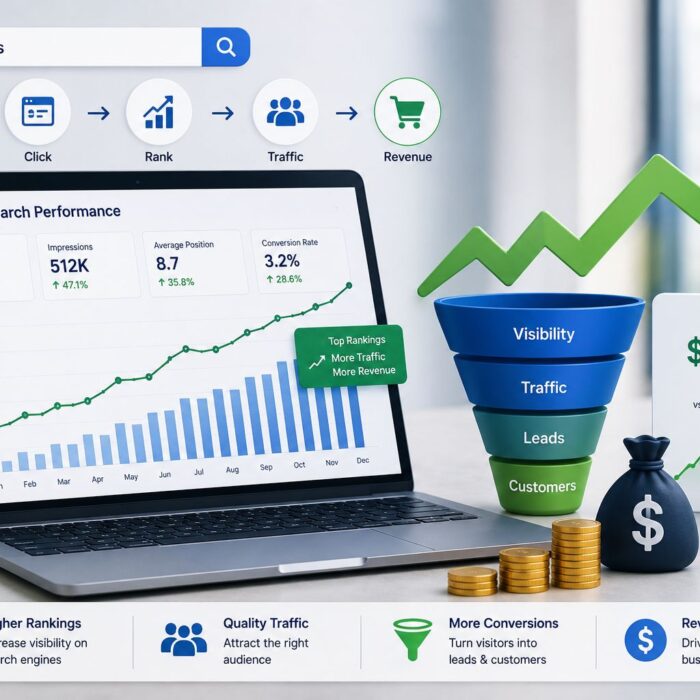
Ask what metrics the agency will track. A good GEO provider should report on more than just keyword rankings. They should show you how your content performs in AI-generated results, what types of queries your content is being cited for, and how that visibility connects to traffic and leads.

Vague reporting is a warning sign. If you cannot understand what progress looks like, you cannot evaluate whether the agency is delivering results.

Content expertise

GEO is fundamentally a content discipline. The agency needs strong writers who understand how to structure answers, use clear language, and build content that AI systems want to reference. Review their past work. Look at whether their content is specific, readable, and well-organized.

Technical SEO knowledge

Schema markup, page speed, mobile usability, and crawlability all affect how AI tools access and process your content. A GEO agency that ignores technical SEO is working with one hand tied behind its back.

Our managed SEO services integrate technical and AI optimization because they depend on each other. One without the other produces weaker results.

Realistic expectations

GEO is not a quick fix. AI visibility builds over time as your content earns authority and trust. Any agency promising dramatic AI visibility results within a few weeks should be treated with skepticism.

A trustworthy provider will explain what realistic progress looks like in three, six, and twelve months. They will also acknowledge that AI search is still evolving and that strategies may need to adapt.

The benefits of working with a GEO agency

Businesses that invest in GEO optimization now are building an advantage that will compound over time. Here is what a strong GEO agency can deliver:

Visibility in AI Overviews. Google AI Overviews now appear at the top of many search results, above traditional blue links. Being cited in those summaries puts your brand in front of users before they even scroll.

Higher-quality traffic. Users who find your content through AI-generated answers are often further along in their decision-making. They asked a specific question and found your content as a trusted answer. That tends to produce more qualified visits.

Reduced dependence on paid ads. Organic AI visibility is not pay-per-click. Once your content earns a place in generative results, it can continue driving traffic without ongoing ad spend.

Brand authority. Being cited by AI tools positions your brand as a credible source in your field. Over time, this authority compounds across multiple queries and topics.

Future-proofing. Search behavior is shifting toward conversational, AI-assisted queries. Businesses that optimize for this now will be better positioned as AI search continues to grow.

For businesses looking to grow beyond their current market, Perron Marketing Group’s AI SEO services are designed to deliver these outcomes through a structured, strategy-first approach.

When should you hire a GEO agency?

Not every business needs a dedicated GEO agency right now. But certain situations make it a smart move.

You should seriously consider hiring a GEO agency if:

  • Your organic traffic has declined despite maintaining strong traditional SEO
  • You have noticed AI Overviews appearing for your target keywords but your content is not cited
  • You operate in a competitive industry where being the cited source matters for credibility
  • You are planning a content or SEO strategy refresh and want to build AI visibility from the start
  • You want to reduce your reliance on paid search over the next 12 to 24 months

For businesses in Toronto, Montreal, or Miami, Perron Marketing Group offers regional expertise alongside AI SEO strategy. Whether you need SEO services in Toronto, SEO in Montreal, or SEO in Miami, the same commitment to AI-forward strategy applies across markets.

How to compare GEO agencies before hiring

Comparing agencies can feel overwhelming when everyone uses similar language. Here are practical comparison points to help you cut through the noise.

Experience with AI search. Ask how long the agency has been working on GEO specifically. This is a newer field, so depth of experience varies significantly.

Case studies and results. Ask for examples of clients whose AI visibility improved. A strong agency should be able to show you before-and-after data, even if it is anonymized. Perron Marketing Group publishes real case studies showing how strategy connects to measurable outcomes.

Content process. Ask how they develop and optimize content for AI. Who writes it? How is it structured? How is it updated over time?

Technical capabilities. Ask whether they handle schema markup, page speed optimization, and crawlability. These are not optional extras for GEO.

Communication style. Ask how often you will receive updates and who your main contact will be. A dedicated point of contact who understands your business is worth a great deal.

Pricing transparency. Ask for a clear scope of work. Vague packages with no defined deliverables are a red flag.

It is also worth reading what businesses should expect from SEO agencies on pricing and results before entering any conversation about fees.

Questions to ask before hiring a GEO agency

Use this list when evaluating any GEO or AI SEO provider:

  • How do you audit current AI search visibility before starting work?
  • What specific changes do you make to improve content for AI-generated results?
  • How do you handle schema markup and structured data?
  • What metrics do you track to measure AI visibility performance?
  • Can you share examples of content that has appeared in AI Overviews?
  • How do you stay current with changes in AI search behavior?
  • Who will manage our account and how often will we receive updates?
  • What does a realistic timeline look like for AI visibility improvements?
  • How does your GEO work integrate with traditional SEO?
  • How do you adjust strategy if results are slower than expected?

Strong answers will be specific, honest about timelines, and grounded in process rather than promises.

FAQs

What is GEO and how does it differ from SEO?

GEO stands for Generative Engine Optimization. It focuses on making your content more likely to be cited or summarized by AI tools like Google AI Overviews and ChatGPT. Traditional SEO focuses on ranking in standard search results. GEO builds on SEO foundations but adds a layer of optimization for how AI systems read, trust, and use content.

How long does it take to see results from GEO?

GEO results typically take three to six months to become measurable, depending on your industry, content quality, and how competitive your target queries are. AI visibility builds gradually as your content earns authority. Any agency promising fast results in a few weeks is not giving you an accurate picture.

Do I need GEO if I already have strong SEO?

Strong SEO is a good foundation, but it does not guarantee AI visibility. AI tools prioritize content that is clearly structured, directly answers questions, and demonstrates authority. Even well-ranked pages may not be cited if they are not optimized for generative results. GEO and SEO work best together.

What does a GEO agency actually do each month?

A solid GEO agency conducts ongoing content optimization, monitors AI search performance, updates existing pages based on new AI search trends, builds structured data, and provides regular reports on visibility changes. Monthly work should be clearly scoped and tied to measurable goals.

How do I know if my content is appearing in AI-generated answers?

Some tools track AI citation frequency, and agencies with GEO expertise should provide this reporting. You can also manually test by querying AI tools with your target questions and checking whether your brand or content is referenced. This should be part of any agency’s reporting process.

Is GEO relevant for local businesses?

Yes. Local businesses can benefit significantly from GEO, particularly for location-based questions. If someone asks an AI tool for a recommendation in your city, having your content optimized for that query can place your business in the response. This is especially relevant for businesses in competitive local markets.

What should I avoid when choosing a GEO agency?

Avoid agencies that cannot explain their process clearly, promise guaranteed rankings in AI results, offer one-size-fits-all packages without an audit, or cannot provide any case studies or examples. Also be cautious of agencies that treat GEO as a separate silo from SEO, since the two disciplines need to work together.

How much does GEO optimization cost?

Costs vary based on the scope of work, the size of your website, and the competitiveness of your industry. A credible agency will assess your current situation before quoting a price. Transparency on deliverables and pricing is a sign of a trustworthy partner.

Choosing the right GEO agency matters more than choosing fast

AI search is not a trend that will reverse. It is the direction that search is moving, and businesses that optimize for it now will hold a clear advantage over those that wait.

Choosing a GEO agency is not about finding the cheapest option or the one with the most buzzwords on its website. It is about finding a team that starts with a real audit, builds a clear strategy, creates content that AI systems trust, and tracks progress in a way you can understand.

Perron Marketing Group has helped businesses across Toronto, Montreal, and Miami grow their organic visibility through strategies that combine strong traditional SEO with forward-looking AI optimization. With over 50 million unique visitors generated and 2,000 projects completed, the approach is grounded in results rather than theory.

If you want to see where your website stands today, get a free AI SEO report and find out exactly what opportunities your current strategy may be missing.

Get Notified of the latest blogs

Get marketing insights, strategies and tips delivered straight to your inbox.

Related Posts

Search has changed. Not slowly, either. Over the past two years, AI-powered results have reshaped how people find information online. Google AI Overviews, ChatGPT, Perplexity, and other generative tools now answer questions directly, often without users clicking a single link.

For businesses that rely on organic search traffic, this shift is significant. If your content does not appear in AI-generated answers, you are missing a growing share of visibility. That is where a GEO agency comes in.

GEO stands for Generative Engine Optimization. It is the practice of structuring and optimizing content so that AI tools are more likely to surface, cite, and summarize it. Choosing the right GEO agency can be the difference between staying visible and getting left behind.

This guide walks you through what a GEO agency actually does, how it differs from a traditional SEO provider, and what to look for before hiring one. By the end, you will know exactly what questions to ask and what green flags to look for.

What is a GEO agency?

A GEO agency helps businesses optimize their online content for AI-generated search results. While traditional SEO focuses on ranking in standard search engine results pages, GEO focuses on getting your content cited, summarized, or referenced by AI tools like Google AI Overviews, ChatGPT, and Bing Copilot.

The goal is straightforward. When someone asks an AI tool a question related to your business, your content should be the source it pulls from.

A good GEO agency will help you with:

  • Structuring content so AI systems can easily read and extract it
  • Writing clear, direct answers to the questions your audience is asking
  • Optimizing for People Also Ask sections and featured snippets
  • Aligning your content with conversational and voice search queries
  • Protecting your existing traffic from algorithm and AI search shifts
  • Tracking how often your content appears in AI-generated responses

This is a newer discipline, but it is grounded in strong content principles. Accuracy, clarity, authority, and relevance still matter. GEO simply builds on top of them with a focus on how AI systems interpret and use your content.

According to Google Search Central, structured and well-organized content helps search systems understand your pages better. That principle extends directly to AI-powered tools, which rely on similar signals when generating responses.

If you are still unsure whether your current SEO strategy covers AI search, it is worth reading why your site may not be showing in AI Mode responses before choosing a partner.

How GEO differs from traditional SEO

Understanding the difference between GEO and traditional SEO helps you ask sharper questions when evaluating agencies.

Traditional SEO is focused on ranking signals. It involves keyword research, backlink building, technical audits, meta tag optimization, and on-page improvements. The end goal is a higher position in search results pages. You can explore a detailed breakdown of this in our AI SEO vs traditional SEO comparison.

GEO takes a different angle. Rather than optimizing purely for ranking position, it optimizes for how AI tools interpret, trust, and cite your content. This includes:

Content structure. AI models favor content that answers questions clearly and directly. Long-winded paragraphs with buried answers are less likely to be cited.

Entity clarity. AI systems build associations between named entities, such as brands, people, products, and places. Content that names these clearly and consistently performs better in generative results.

Authority signals. AI tools tend to pull from sources that demonstrate expertise. This means factual, specific, and well-sourced content tends to outperform vague or general content.

Conversational alignment. Users ask AI tools questions in natural language. Content that mirrors those conversational queries is more likely to surface as an answer.

That said, the two disciplines are not opposites. Strong traditional SEO is still the foundation. GEO builds on top of it. A provider that understands both gives you a more complete strategy.

What to look for in a GEO agency

Not every agency that mentions AI in its marketing actually understands GEO. Here is what separates strong providers from weak ones.

A clear audit process

A GEO agency should start by reviewing your current content and its AI visibility performance. This means checking whether your pages appear in AI Overviews, how your content is structured, and where the gaps are.

At Perron Marketing Group, the process begins with a full SEO and AI audit that identifies both traditional and AI search opportunities before a single change is made. Without this step, any agency is guessing.

Transparent reporting

Ask what metrics the agency will track. A good GEO provider should report on more than just keyword rankings. They should show you how your content performs in AI-generated results, what types of queries your content is being cited for, and how that visibility connects to traffic and leads.

Vague reporting is a warning sign. If you cannot understand what progress looks like, you cannot evaluate whether the agency is delivering results.

Content expertise

GEO is fundamentally a content discipline. The agency needs strong writers who understand how to structure answers, use clear language, and build content that AI systems want to reference. Review their past work. Look at whether their content is specific, readable, and well-organized.

Technical SEO knowledge

Schema markup, page speed, mobile usability, and crawlability all affect how AI tools access and process your content. A GEO agency that ignores technical SEO is working with one hand tied behind its back.

Our managed SEO services integrate technical and AI optimization because they depend on each other. One without the other produces weaker results.

Realistic expectations

GEO is not a quick fix. AI visibility builds over time as your content earns authority and trust. Any agency promising dramatic AI visibility results within a few weeks should be treated with skepticism.

A trustworthy provider will explain what realistic progress looks like in three, six, and twelve months. They will also acknowledge that AI search is still evolving and that strategies may need to adapt.

The benefits of working with a GEO agency

Businesses that invest in GEO optimization now are building an advantage that will compound over time. Here is what a strong GEO agency can deliver:

Visibility in AI Overviews. Google AI Overviews now appear at the top of many search results, above traditional blue links. Being cited in those summaries puts your brand in front of users before they even scroll.

Higher-quality traffic. Users who find your content through AI-generated answers are often further along in their decision-making. They asked a specific question and found your content as a trusted answer. That tends to produce more qualified visits.

Reduced dependence on paid ads. Organic AI visibility is not pay-per-click. Once your content earns a place in generative results, it can continue driving traffic without ongoing ad spend.

Brand authority. Being cited by AI tools positions your brand as a credible source in your field. Over time, this authority compounds across multiple queries and topics.

Future-proofing. Search behavior is shifting toward conversational, AI-assisted queries. Businesses that optimize for this now will be better positioned as AI search continues to grow.

For businesses looking to grow beyond their current market, Perron Marketing Group’s AI SEO services are designed to deliver these outcomes through a structured, strategy-first approach.

When should you hire a GEO agency?

Not every business needs a dedicated GEO agency right now. But certain situations make it a smart move.

You should seriously consider hiring a GEO agency if:

  • Your organic traffic has declined despite maintaining strong traditional SEO
  • You have noticed AI Overviews appearing for your target keywords but your content is not cited
  • You operate in a competitive industry where being the cited source matters for credibility
  • You are planning a content or SEO strategy refresh and want to build AI visibility from the start
  • You want to reduce your reliance on paid search over the next 12 to 24 months

For businesses in Toronto, Montreal, or Miami, Perron Marketing Group offers regional expertise alongside AI SEO strategy. Whether you need SEO services in Toronto, SEO in Montreal, or SEO in Miami, the same commitment to AI-forward strategy applies across markets.

How to compare GEO agencies before hiring

Comparing agencies can feel overwhelming when everyone uses similar language. Here are practical comparison points to help you cut through the noise.

Experience with AI search. Ask how long the agency has been working on GEO specifically. This is a newer field, so depth of experience varies significantly.

Case studies and results. Ask for examples of clients whose AI visibility improved. A strong agency should be able to show you before-and-after data, even if it is anonymized. Perron Marketing Group publishes real case studies showing how strategy connects to measurable outcomes.

Content process. Ask how they develop and optimize content for AI. Who writes it? How is it structured? How is it updated over time?

Technical capabilities. Ask whether they handle schema markup, page speed optimization, and crawlability. These are not optional extras for GEO.

Communication style. Ask how often you will receive updates and who your main contact will be. A dedicated point of contact who understands your business is worth a great deal.

Pricing transparency. Ask for a clear scope of work. Vague packages with no defined deliverables are a red flag.

It is also worth reading what businesses should expect from SEO agencies on pricing and results before entering any conversation about fees.

Questions to ask before hiring a GEO agency

Use this list when evaluating any GEO or AI SEO provider:

  • How do you audit current AI search visibility before starting work?
  • What specific changes do you make to improve content for AI-generated results?
  • How do you handle schema markup and structured data?
  • What metrics do you track to measure AI visibility performance?
  • Can you share examples of content that has appeared in AI Overviews?
  • How do you stay current with changes in AI search behavior?
  • Who will manage our account and how often will we receive updates?
  • What does a realistic timeline look like for AI visibility improvements?
  • How does your GEO work integrate with traditional SEO?
  • How do you adjust strategy if results are slower than expected?

Strong answers will be specific, honest about timelines, and grounded in process rather than promises.

FAQs

What is GEO and how does it differ from SEO?

GEO stands for Generative Engine Optimization. It focuses on making your content more likely to be cited or summarized by AI tools like Google AI Overviews and ChatGPT. Traditional SEO focuses on ranking in standard search results. GEO builds on SEO foundations but adds a layer of optimization for how AI systems read, trust, and use content.

How long does it take to see results from GEO?

GEO results typically take three to six months to become measurable, depending on your industry, content quality, and how competitive your target queries are. AI visibility builds gradually as your content earns authority. Any agency promising fast results in a few weeks is not giving you an accurate picture.

Do I need GEO if I already have strong SEO?

Strong SEO is a good foundation, but it does not guarantee AI visibility. AI tools prioritize content that is clearly structured, directly answers questions, and demonstrates authority. Even well-ranked pages may not be cited if they are not optimized for generative results. GEO and SEO work best together.

What does a GEO agency actually do each month?

A solid GEO agency conducts ongoing content optimization, monitors AI search performance, updates existing pages based on new AI search trends, builds structured data, and provides regular reports on visibility changes. Monthly work should be clearly scoped and tied to measurable goals.

How do I know if my content is appearing in AI-generated answers?

Some tools track AI citation frequency, and agencies with GEO expertise should provide this reporting. You can also manually test by querying AI tools with your target questions and checking whether your brand or content is referenced. This should be part of any agency’s reporting process.

Is GEO relevant for local businesses?

Yes. Local businesses can benefit significantly from GEO, particularly for location-based questions. If someone asks an AI tool for a recommendation in your city, having your content optimized for that query can place your business in the response. This is especially relevant for businesses in competitive local markets.

What should I avoid when choosing a GEO agency?

Avoid agencies that cannot explain their process clearly, promise guaranteed rankings in AI results, offer one-size-fits-all packages without an audit, or cannot provide any case studies or examples. Also be cautious of agencies that treat GEO as a separate silo from SEO, since the two disciplines need to work together.

How much does GEO optimization cost?

Costs vary based on the scope of work, the size of your website, and the competitiveness of your industry. A credible agency will assess your current situation before quoting a price. Transparency on deliverables and pricing is a sign of a trustworthy partner.

Choosing the right GEO agency matters more than choosing fast

AI search is not a trend that will reverse. It is the direction that search is moving, and businesses that optimize for it now will hold a clear advantage over those that wait.

Choosing a GEO agency is not about finding the cheapest option or the one with the most buzzwords on its website. It is about finding a team that starts with a real audit, builds a clear strategy, creates content that AI systems trust, and tracks progress in a way you can understand.

Perron Marketing Group has helped businesses across Toronto, Montreal, and Miami grow their organic visibility through strategies that combine strong traditional SEO with forward-looking AI optimization. With over 50 million unique visitors generated and 2,000 projects completed, the approach is grounded in results rather than theory.

If you want to see where your website stands today, get a free AI SEO report and find out exactly what opportunities your current strategy may be missing.

Scroll to Top